Why Certain Sounds Feel Calming
Updated: Sep 11
Why do certain sounds feel so calming? Explore rhythm, repetition, frequency, personal experience, and simple ways to bring sound into your own grounding or wellness rituals.
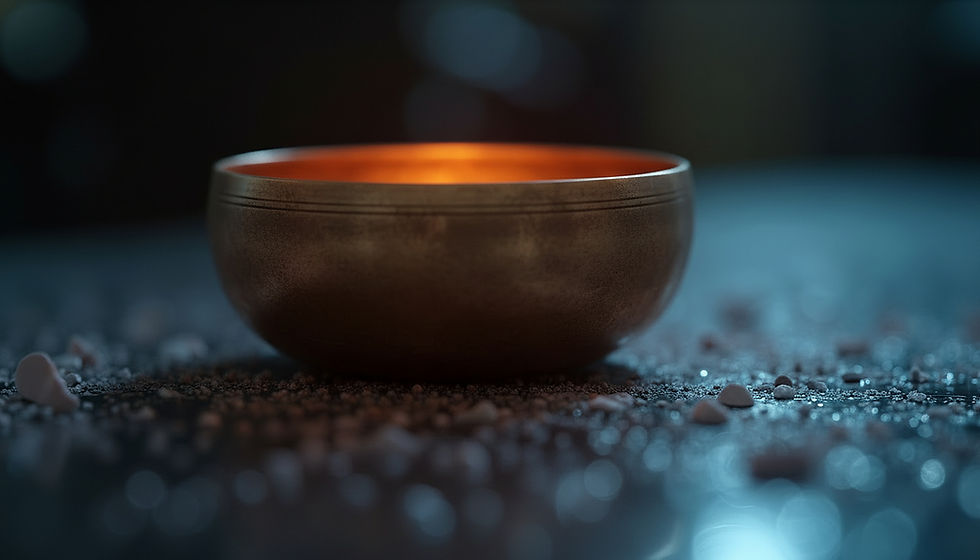
Why Certain Sounds Feel Calming
Have you ever noticed how one sound can change the entire feeling of a room?
Rain against a window. Ocean waves. A low hum. A favorite song. The soft ring of a singing bowl.
Some sounds seem to help us settle almost immediately, while others can make us feel distracted, alert, or restless.
Sound is always around us, but we don’t always stop to notice how deeply we respond to it.
What Is Frequency?
When we talk about frequency in sound, we’re talking about how quickly a sound wave repeats.
Frequency is measured in hertz, or Hz. Lower frequencies are generally heard as deeper tones, while higher frequencies are heard as higher pitches.
But the experience of sound can be much more personal than a number.
The same sound can feel soothing to one person, energizing to another, and completely neutral to someone else.
That’s part of what makes sound so interesting to explore.
Why Repetition Can Feel Calming
There’s something comforting about a sound that repeats.
Think about:
rainfall
ocean waves
soft drumming
a fan humming
wind through trees
a singing bowl
repetitive instrumental music
Predictable sound can create a sense of rhythm and steadiness.
Instead of constantly noticing something new, your attention has one consistent pattern to follow.
For some people, that can make it easier to slow down and settle into the moment.
Rhythm Gives the Mind Somewhere to Rest
A busy mind is often jumping from one thought to the next.
Rhythm can give that attention somewhere simple to land.
You may notice this while:
walking to music
rocking gently in a chair
listening to waves
humming
drumming
repeating a mantra
following the tone of a bowl or chime
Sometimes quiet helps.
Sometimes a gentle sound helps more.
There isn’t one right way to create calm.
Your Own Associations Matter
Sound can also carry memory, emotion, and meaning.
A thunderstorm might remind one person of cozy evenings at home.
Someone else may associate storms with stress.
A particular song may instantly bring back a memory.
A singing bowl might feel peaceful to someone who connects it with meditation or ritual.
Our responses can be shaped by experience, environment, and personal belief.
That doesn’t make one response more correct than another.
It simply means sound can be deeply personal.
Exploring Specific Frequencies
Many people enjoy exploring specific sound frequencies as part of meditation, relaxation, spiritual practice, or personal ritual.
You may come across frequencies such as:
432 Hz
528 Hz
396 Hz
binaural tones
solfeggio frequencies
tuning fork frequencies
Different traditions, teachers, practitioners, and listeners may connect different meanings or experiences to these sounds.
You don’t have to decide what you believe before you explore them.
You can simply listen.
Notice how you feel.
Pay attention to what shifts, what doesn’t, and what resonates with you personally.
Try a Simple Sound Experiment
Choose a few sounds that interest you.
Maybe:
rain
ocean waves
birds
a singing bowl
tuning forks
instrumental music
a frequency track
white, pink, or brown noise
complete silence
Listen to each one for a few minutes.
You don’t need to force yourself to feel anything.
Just notice.
Does your breathing change?
Does your body feel different?
Do your thoughts slow down?
Does it help you focus?
Does it make you feel restless?
Do you simply enjoy it?
There is value in paying attention to your own response.
Create a Small Sound Ritual
Once you find a sound you enjoy, try using it intentionally.
You might:
play a calming track while journaling
use a singing bowl before meditation
listen to rain sounds before bed
play soft music while stretching
sit outside and listen to nature
use a tuning fork as part of a personal ritual
begin your morning with the same peaceful song
It doesn’t have to be complicated.
A ritual can be something very small.
Sometimes repetition itself becomes the signal:
This is my moment to slow down.
Let Curiosity Lead
You don’t need to have every answer before exploring sound, frequency, or energetic practices.
You can stay curious.
Try things.
Notice what feels supportive.
Leave behind what doesn’t.
Come back to what helps you feel grounded, focused, peaceful, connected, or simply more present.
There are many ways people experience sound.
Your experience is allowed to be your own.
And sometimes, one small sound can become a meaningful part of the way you return to yourself.


Comments